Scene Work or Full Runs: Pick the Rehearsal Mode by Its Job
Choose scene work or full runs by the question your play needs to answer, so each rehearsal reveals a useful next move instead of consuming time.
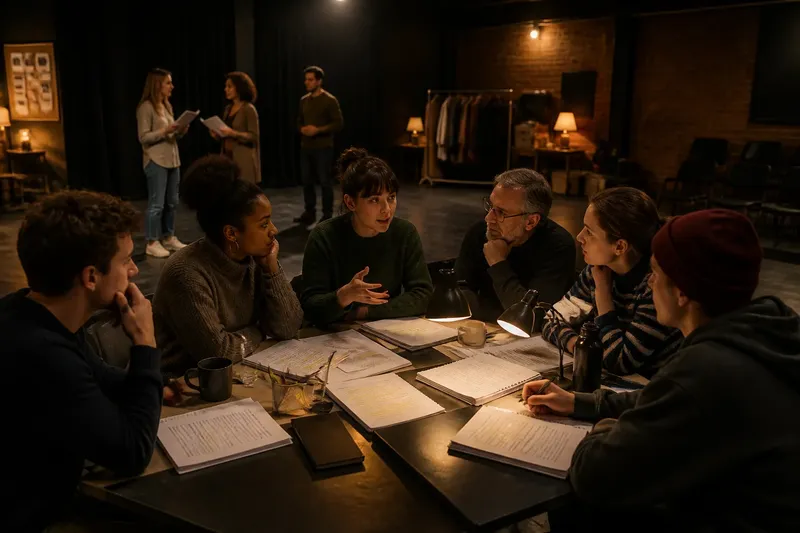
Scene work or full runs: which rehearsal mode will answer the question your cast is facing tonight? If a scene keeps losing its turn, focused work can expose the snag; if the play feels like a set of disconnected rooms, a full run can show where its current is breaking. The choice is not about which mode is more serious. It is about what the group needs to see and hear.
Amateur companies often have limited rehearsal time, and a full run can feel reassuring because everyone gets through the script. But getting through a play is not the same as understanding what is working. A session earns its place when its shape matches its job: close attention for a local problem, uninterrupted movement for a play-wide one.
Choose the rehearsal mode by the question
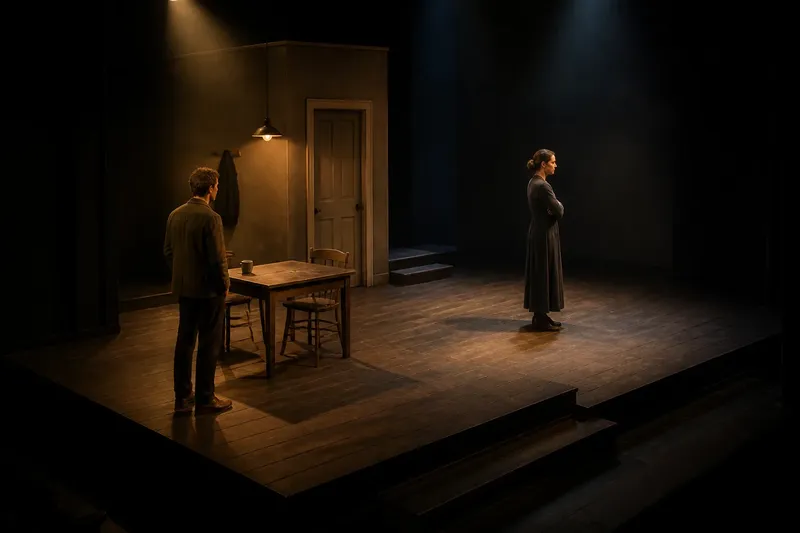
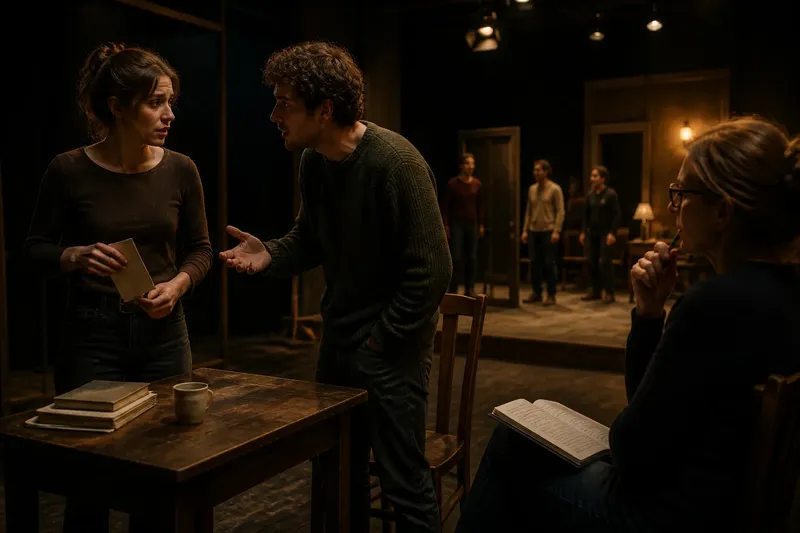
Scene work concentrates on a defined stretch of the play. That might be a two-person exchange, a scene change, or a sequence in which a character’s decision should alter the room. The director can stop, repeat, adjust a playable action, and watch what changes. This makes scene work useful when a specific moment is unclear or inconsistent.
A full run follows the play from beginning to end without stopping for ordinary notes. It reveals how scenes connect, how energy rises or ebbs, whether entrances and transitions carry the story forward, and what performers can sustain across the whole evening. It is less suited to diagnosing every local difficulty; the group may notice a problem but need a later focused session to understand it.
Before booking the room, put the question into one sentence. “Does the argument change the relationship?” points toward scene work. “Does the second half still build after the interval?” points toward a run. “Can the audience follow the shift from the kitchen to the station?” may call for either mode, depending on whether the uncertainty lies in one transition or the play’s overall flow.
Write the question where the cast can see it. It will keep the session from drifting into notes on unrelated details.
Use a week to alternate close attention and continuity
A workable rehearsal week does not need a rigid formula. It needs a sequence in which each session produces a better question for the next. Consider the stage the production has reached, the cast’s availability, and how much of the play is ready to move without frequent stops.
- Early in the week, isolate the knot. Pick a scene that carries a major decision, a difficult handoff, or a turn the audience must understand. Give the actors room to try different tactics rather than asking them to polish a line in isolation. Make a note of what becomes clearer and what remains uncertain.
- Next, work the neighboring material. Rehearse the scene before or after the knot, including its entrance or exit. A moment may play clearly on its own yet arrive without enough pressure or leave no consequence behind. Keep the focus on the connection, not on reopening every scene.
- Midweek, run a substantial stretch. Start before the problem scene and continue beyond it. This lets the cast test whether the work holds when it has to grow out of what came before. If the stretch repeatedly stops, record the sticking point and return to it in a later scene session rather than turning the run into a series of interruptions.
- Later in the week, choose based on what emerged. If the same local moment still blurs, return to scene work with a sharper question. If scenes make sense separately but the story feels lumpy, run a longer section or the whole play. The first session should change the choice for the next one.
- Finish with a brief review. Ask the cast what they could track while playing and what became hard to carry. The director can note one or two observations for the next rehearsal. Avoid trying to solve every concern in the closing minutes.
Say you are rehearsing a comedy in which a character hides a letter, but the later discovery does not land. Imagine that the group first works the hiding scene, testing whether the character is protecting someone or improvising under pressure; the next session runs from the hiding through the discovery. The expected observable result is a clearer link between the earlier choice and the later reaction, or a more precise question about where that link still breaks. The schedule serves the investigation, not the other way around.
Notice what each mode can reveal
Focused scene work lets the director listen for changes in intention, attention, and pace. If an exchange sounds like a string of lines, the actors can try directing each line toward a different outcome: persuade, evade, provoke, or end the conversation. The useful observation is not that one version looks lively. It is whether the new action gives the partner something specific to resist, accept, or redirect.
Runs reveal accumulation. A tense scene may work in isolation but lose force after a long, busy sequence. A quiet passage may become more affecting when the audience has watched a character struggle. A transition that seems short on paper may drain momentum when it happens in performance. These are relationships between parts, and a run gives them room to appear.
Each mode also hides things. Scene work can make an isolated passage feel more polished than it will feel in context. A run can expose a wobble without giving the cast time to examine it. Treat what you notice as a clue, not a verdict. The next rehearsal can change mode to test the clue.
After a run, write down the point where attention shifted, energy sagged, or a transition felt uncertain. After scene work, record what action or relationship changed when the actors tried a different approach. Those notes make the next choice more exact than a general instruction to “work on the pacing.”
Move from scene work to a run when the material can travel
There is no single cue that says a play is ready for a full run. Look instead for signs that the actors can carry the material across a longer stretch. They do not need to have found a final interpretation. They do need enough shared footing that stopping every few lines would interrupt more learning than it creates.
- Entrances and exits have a workable shape, even if their timing still needs attention.
- Actors can follow the scene’s basic objective without waiting for the director to supply each next move.
- Props and furniture needed for the stretch are available in a form that lets performers practice the action.
- The cast can recover from a stumble and continue, rather than treating every missed beat as a reason to halt.
- The group has a question that only continuity can answer, such as whether a character’s change remains legible across several scenes.
These are signs of useful readiness, not a test to pass. If a run becomes stop-and-start, that is information. Ask whether the trouble is local, such as one confusing handoff, or broad, such as a chain of scenes that never gains direction. A local snag suggests focused work. A broad uncertainty may still call for another run, but with one clear observation task.
When a run is interrupted by a practical problem, separate it from the artistic question. A missing hand prop might make an action difficult to judge; an unclear character choice is a different matter. Note both, then decide which one needs attention before the next continuous pass.
Keep the run honest and the notes usable
A full run works best when the director protects its continuity. Agree in advance that ordinary pauses are for genuine interruptions, not every line reading or small adjustment. If a safety concern or an urgent practical issue arises, stop. Otherwise, let the play continue and make a brief note for later.
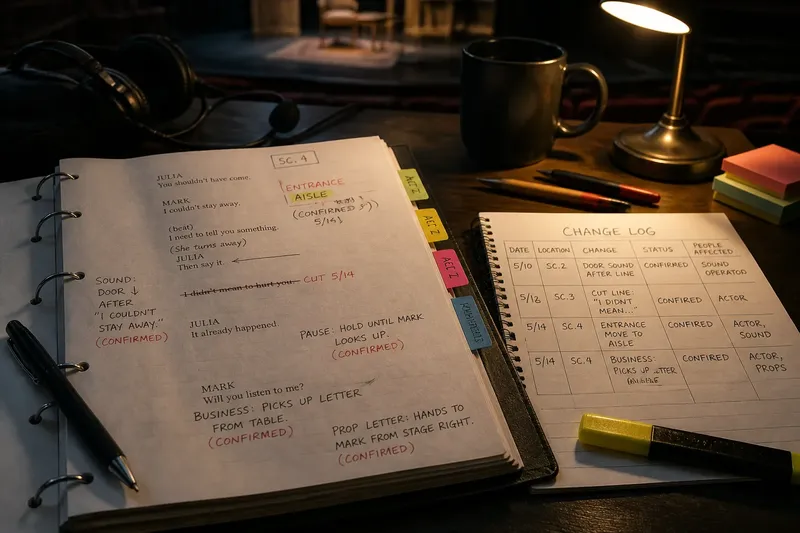
Use a simple page with three columns: moment, observation, next question. “After the station scene,” for instance, might pair “the next entrance arrives before the audience has absorbed the departure” with “does the transition need more room, or does the preceding scene need a cleaner ending?” This records what was observable without prescribing an answer too soon.
Scene work benefits from the same restraint. Choose one problem and give actors a playable task. If the question is whether a character is trying to conceal fear, do not stack on instructions about voice, gesture, and pace. Let the action shape those details, then notice what the partner can respond to.
Keep notes short enough to use. A page of broad judgments can leave actors unsure what to do; a concrete moment and a question give the next rehearsal a starting point.
Which rehearsal mode fits the problem you have?
Should a new scene be rehearsed before the whole play?
Usually, give a new scene focused attention first so the cast can establish its relationships, actions, and basic movement. Then place it in a longer stretch once it can continue without constant explanation; the surrounding play may change how the scene lands.
Should the director stop a full run to give a note?
Stop for an urgent safety or practical issue, or when continuing would make the work impossible. For an ordinary artistic note, record the moment and let the run proceed; discuss it afterward or return to the passage in scene work.
Can a full run still be useful when the cast is unsure of lines?
Yes, if the aim is to understand broad movement and the actors can keep the play going with the support the production allows. If forgotten lines repeatedly break the flow, focus on smaller sections until the cast can sustain a useful stretch.
When should a company stop doing scene work?
Do not stop simply because scenes feel polished. Shift more rehearsal time to runs when the main questions concern continuity, cumulative energy, or transitions, and return to a scene when a particular moment keeps defeating the larger shape.
Let the question choose the next rehearsal
Choosing scene work or full runs is a practical way to protect the cast’s attention. Scene work gives a local problem room to change; a run reveals what the play does across uninterrupted time. A balanced rehearsal week can use both, but not by habit: let one session’s observations determine the next session’s job.
Before the group leaves, name the question that remains and the evidence that would help answer it. If you can say what the cast should watch for, you can choose the mode with more confidence. That small decision keeps rehearsal time pointed toward the play the audience will actually encounter.