A Quiet Plan for the Hour Before the Audience Arrives
A calm pre-show hour plan helps an amateur theatre company catch essential problems, settle performers and keep last-minute distractions from taking over.
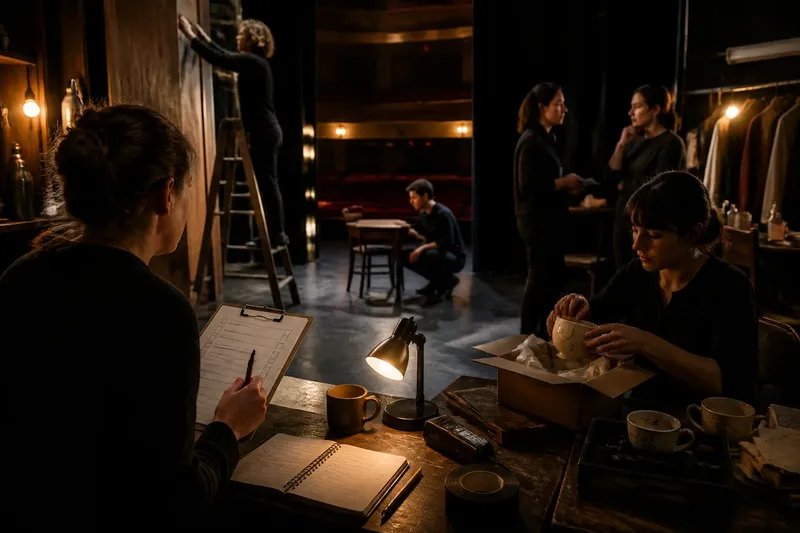
What should happen in the hour before the audience arrives? A calm pre-show hour plan gives an amateur theatre company room to catch essential problems, settle performers and keep late distractions from taking over. The aim is not to make every corner perfect. It is to put the right person on each real task, then let the room grow quieter as curtain time approaches.
That hour can unravel in familiar ways: a prop is missing, a performer is pulled into a conversation, or the director keeps adding small notes until no one can settle. Each problem has a different cause, so a useful routine does not treat all activity as urgent. Work from the stage outward, protect performers’ attention, and give late requests a clear route.
Start with one person coordinating the hour
The first problem is often that everyone assumes someone else is in charge. The stage manager, director, producer and front-of-house lead may all be present, but overlapping instructions create more movement than progress. Before the hour starts, name one person who will coordinate timing and decide whether a new concern needs action.
That coordinator does not need to do every check. They need to know who owns each one and where to hear about a problem. The stage manager may track backstage readiness, while the front-of-house lead manages the lobby and audience flow. The director can focus on performers rather than being asked to locate tape, answer door questions and approve costume adjustments at once.
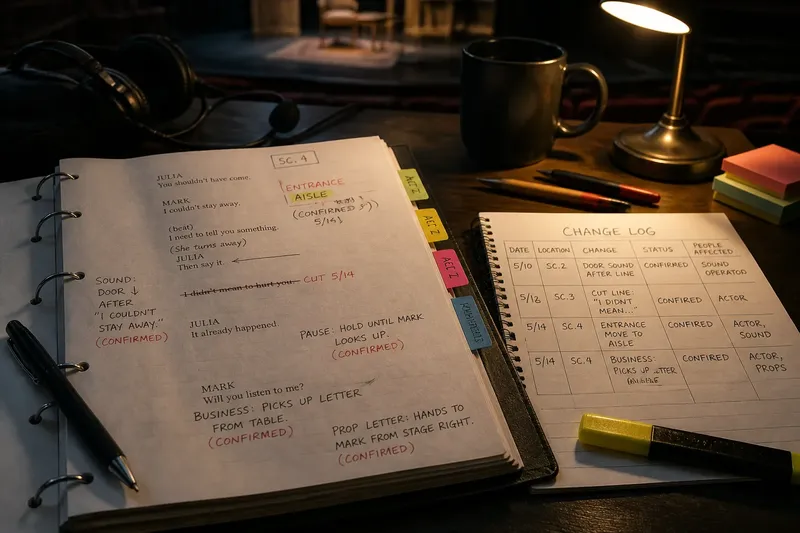
Use a short verbal handoff: identify the check owner, the place to report a concern, and the point after which nonessential changes stop. Keep the plan visible on a clipboard or whiteboard, but avoid a long list that invites people to invent extra work.
One clear coordinator can make the room feel less crowded before anyone moves a prop.
Fix the essentials before polishing anything
A crew can lose the first part of the hour to small visual refinements while a basic readiness issue goes unnoticed. This usually happens because polishing is easy to see: a chair is crooked, a costume hem needs smoothing, or a lobby table looks untidy. Essential checks may be quieter, but they affect whether the performance can proceed safely and as intended.
Choose a compact pass through the spaces the company will use. Confirm that performers and crew can reach their places, that scene props are in their assigned locations, and that the stage manager’s cueing position is ready. Check that entrances and exit paths are clear. Verify that the set and any equipment look as expected, and pass a concern to the person responsible rather than attempting unfamiliar repairs under pressure.
- Stage and access: Look for loose objects or blocked routes; clear simple obstructions and escalate anything that needs an authorized fix.
- Props: Match each essential item to its established place; report a missing or damaged item to the stage manager.
- Costumes: Confirm that performers have their assigned pieces; send a fit or fastening problem to the designated wardrobe person.
- Sound and lighting readiness: Confirm that the people responsible are present and ready to follow the established cue plan; do not improvise technical changes.
- Audience areas: Check that the lobby and seating routes are ready for the front-of-house team; refer access or building concerns to the venue contact.
- Communication: Make sure the stage manager can reach the relevant crew and receive a clear status report.
For questions involving equipment, venue access, safety or local requirements, follow the relevant manufacturer instructions and venue rules, and ask the qualified person responsible.
Imagine the props lead discovers a cracked cup during the first check. They tell the stage manager, who asks the director whether the scene can use the company’s already approved spare. The observable result is a known decision and a correctly placed prop, rather than several people searching backstage while performers wait.
Stop small fixes from becoming a second rehearsal
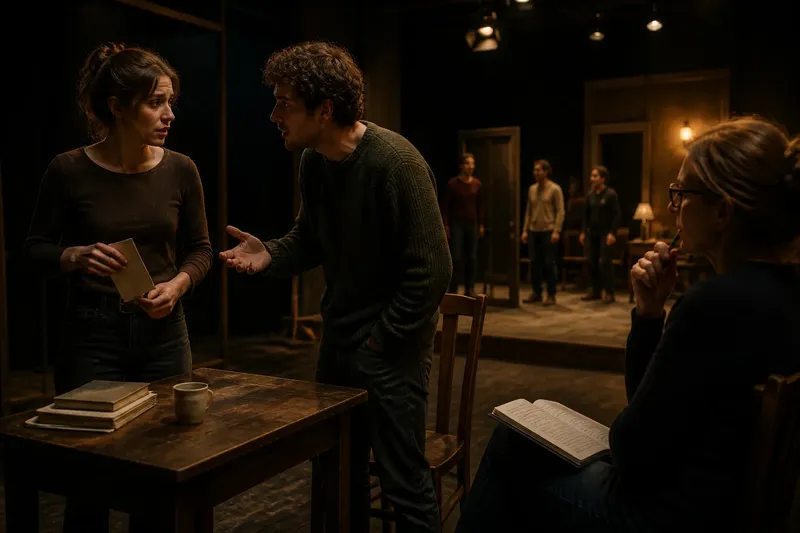
Another common snag is the director spotting fresh possibilities just as performers need to focus. A line could land more sharply; a crossing could be cleaner; a pause might carry more feeling. The cause is often a good instinct arriving at the wrong time. A performance hour is not a useful place to reopen choices that have already been rehearsed.
Ask whether the note concerns clarity, safety or a genuine obstacle to carrying out the established staging. If so, give it to the performer or crew member who needs it, in a brief and private way. If it is an optional improvement, write it down for a later conversation. Avoid delivering a stack of new interpretations to the whole company.
When a performer asks for clarification, answer the specific question and let them return to their preparation. A last-minute note should reduce uncertainty, not create another version of the scene to remember.
Protect a real settling period for performers
Performers can be present in the building without being ready to go on. A costume question, a noisy corridor or a well-meant conversation may keep pulling attention outward. This is not necessarily reluctance; the company may simply have left no unclaimed time between practical duties and the performance.
Once essential checks are complete, make the remaining preparation predictable. Let performers use their own established routines, such as reviewing a scene quietly, warming up in the agreed area or sitting without conversation. Keep the route to the stage and any necessary call times clear. Do not require everyone to use the same ritual; the purpose is protected time, not uniform behavior.
Say you notice that a performer keeps getting asked to help with lobby tasks after changing. The coordinator can redirect those requests to the front-of-house lead and confirm when the performer is next needed. The visible result is a quieter dressing area and fewer interruptions, without asking the performer to justify how they prepare.
Tell the company where to go and when to be ready, then leave the settling period alone.
Route late requests instead of chasing them?
What counts as an essential last-minute fix?
A concern is essential if it affects a clear performance requirement, a person’s ability to do their assigned task, or a safe route through the space. A preference about appearance or a newly imagined artistic adjustment can usually wait. Send the concern to the coordinator, who can involve the right person without broadcasting it.
What should happen when an essential prop is missing?
Tell the stage manager, who can check the established storage place and ask the prop lead about an approved substitute. Avoid borrowing an item from another scene or changing a performer’s business without agreement. Once a decision is made, put the item where the actor expects to find it.
How should the team respond to a late technical concern?
Pass it to the crew member responsible for that system and keep performers out of the work area. Do not ask an unqualified person to alter equipment or try an unplanned workaround. The coordinator can decide whether the concern needs an authorized response before the performance can proceed.
What can the director do when a new idea appears?
Write it down and ask whether anything must change for tonight’s performance to remain clear and playable. If not, leave the established staging in place and revisit the idea after the show. This protects the company from having to absorb a fresh instruction at the last moment.
Keep the room from filling with distractions
When a task is finished, people often create a new one because waiting feels unproductive. This is how harmless tidying turns into moving a set piece, last-minute costume swapping or a group discussion about a scene. The remedy is not to keep everyone busy. It is to make the next useful action—or the choice to stop—plain.
Give each role a place to wait and a person to contact if something changes. Keep non-show conversations away from performer preparation areas, and direct audience questions to front of house. If someone raises a nonessential concern, acknowledge it, note it if needed, and return attention to the plan.
A quiet hour does not mean a silent room or a perfectly smooth evening. It means the team knows which work is still necessary, who owns it and when to leave well enough alone. That distinction is the practical heart of a pre-show hour plan: the stage gets its checks, performers get room to settle, and no one has to turn every small worry into an emergency.